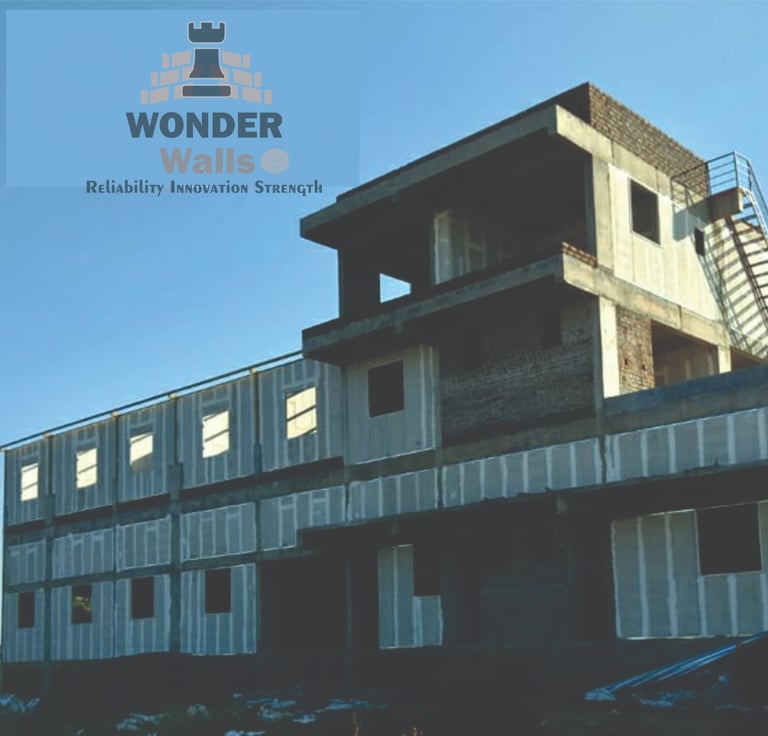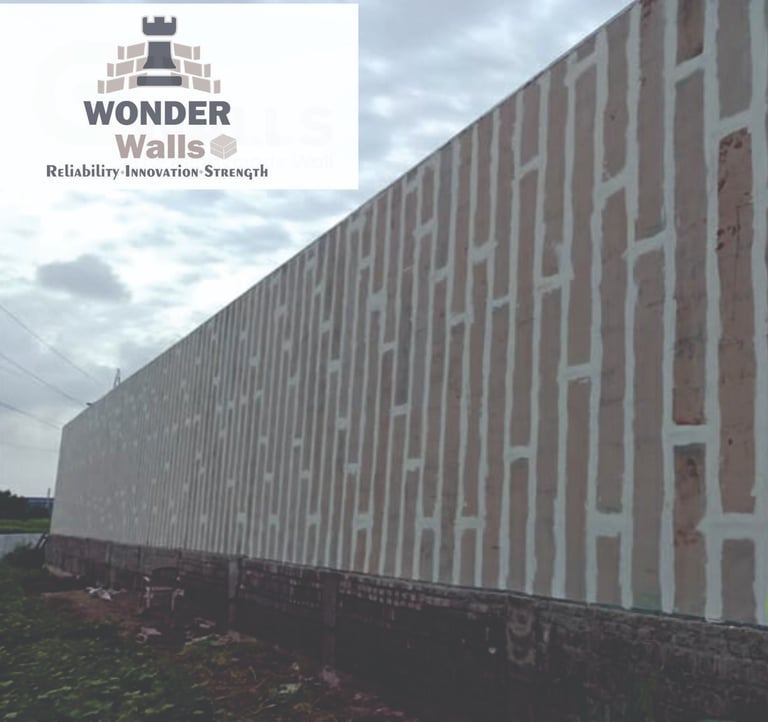
Key features and benefits
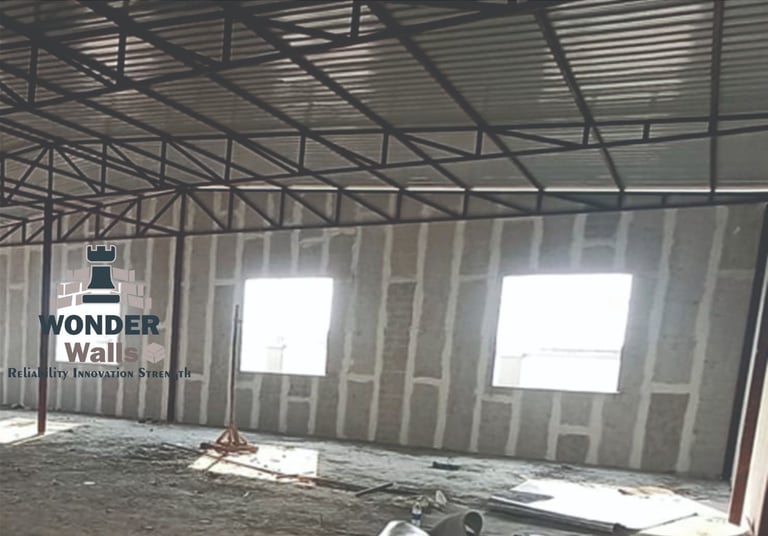
Lightweight: AAC panels are significantly lighter than traditional concrete, reducing the building's overall dead load and making construction easier and faster.
Energy-efficient: The cellular structure provides superior thermal insulation, which can reduce air conditioning costs and energy consumption by up to 30%.
Fire-resistant: They are non-combustible and can withstand fire for several hours (up to 4 hours).
Soundproof: The porous structure offers excellent sound absorption.
Durable: The panels are resistant to cracks, pests, and other structural issues.
Eco-friendly: The manufacturing process uses less energy and raw materials compared to traditional concrete, and some types can incorporate fly ash, according to.
Versatile: They can be used for both load-bearing and non-load-bearing walls, as well as for floors and
roofs.
Applications
Residential: Internal and external walls, floors, and roofs.
Commercial and industrial: Offices, warehouses, shopping malls, and factories.
Public and institutional: Hospitals, schools, and transport hubs.
Specialty: Used in earthquake-prone zones due to their seismic resistance


Our Projects